A Persian rug is far more than a decorative floor covering. Its value grows from design, dyeing, knotting, finishing, trade and the cultural knowledge carried by generations of makers.
Beyond decoration
A Persian rug first attracts the eye through colour, rhythm and balance. With time, its deeper qualities become clear: it softens acoustics, adds warmth and gives a room a visual centre. Unlike a trend-led accessory, a well-chosen handmade rug can remain relevant through many changes in furniture and architecture.
No two handmade rugs are completely identical. Small variations may be evidence of human presence rather than flaws. The important distinction is between the living character of handwork and technical defects that reduce strength or durability.
An economy built on skill
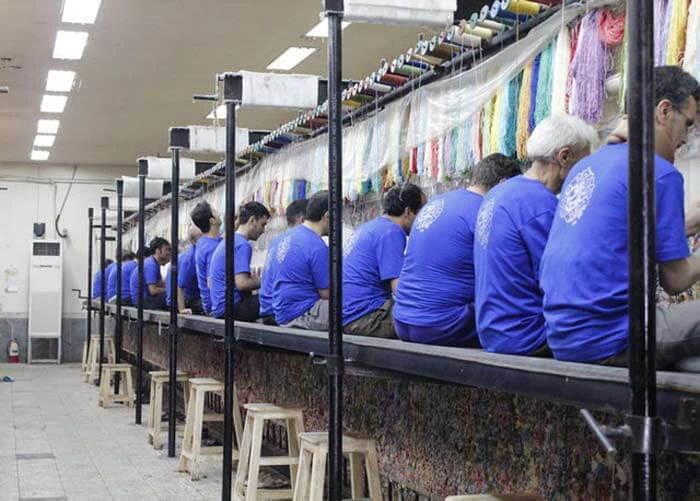
The economic value of a hand-knotted rug cannot be measured by wool, cotton or silk alone. Before weaving begins, fibres are selected, yarn is prepared, colours are developed, a design is planned and the loom is set up. During production, the weaver makes thousands of decisions about tension, density, curves and colour transitions.
The wider chain also includes designers, dyers, washers, restorers, photographers, logistics specialists, retailers and advisers. A healthy rug economy therefore supports many specialised forms of work.
Families, women and local communities
In many weaving regions, knowledge has moved through families and small workshops. Women have played a central role not only as makers, but as guardians of colour sense, technical discipline and regional design language. Fair pay, safe conditions and transparent commercial relationships are essential to recognising that contribution.
When makers have access to reliable materials, training and markets, rug production can strengthen smaller towns and rural communities while preserving skills that might otherwise disappear.
Art and industry at the same time
A Persian rug belongs to both worlds. It requires organisation, tools, quality control and commercial planning, yet its strongest qualities depend on judgement, rhythm and artistic sensitivity. In industrial production, variation is often treated as a defect; in handmade work, controlled variation can create identity.
Quality should therefore be assessed technically through structure, colour stability, edges and materials, and artistically through composition, balance, originality and regional character.
Handmade and machine-made serve different needs
Machine-made rugs offer standard dimensions, rapid supply and predictable prices. Hand-knotted rugs offer individuality, repairability, long life and a direct link to craft. They should not be compared as if price were the only difference.
Technology can still help the handmade sector through documentation, photography, inventory, translation and customer communication. It should support craftsmanship, never disguise machine production as handmade.
Why the price is more than materials
Raw material is only the beginning. Value grows through design, knotting, colour control, finishing and years of experience. Size matters, but so do fibre quality, knot structure, complexity, age, condition, provenance and the reputation of the weaving region or workshop.
Clear documentation matters to buyers. Origin, materials, technique, dimensions, approximate age, repairs and care instructions should be stated plainly.
Sustainability and fair trade
A high-quality rug can remain in use for decades, be repaired and passed on. That longevity offers a meaningful alternative to disposable interiors. Sustainability claims should still be specific: fibre origin, dyes, water use, chemicals, working conditions, packaging and transport all matter.
The difference between the maker’s payment and the retail price may include real costs such as finishing, freight, insurance, customs, warehousing, taxes, marketing and service. Problems arise when the chain is opaque or the maker carries most of the risk.
Persian rugs in contemporary interiors
Persian rugs are not limited to traditional rooms. In minimalist homes, boutique hotels, galleries and modern offices, their texture and colour create a powerful contrast with clean architectural lines. A rug can anchor a seating area, soften stone or timber and bring human warmth to a restrained space.
Accurate photography, close-up details, standard measurements, transparent prices, delivery terms, return policies and care guidance are now part of professional presentation.
How to assess an authentic rug
Look at the materials, the back, the knot structure, the edges and the consistency of the weave. Examine colour in different light and ask whether repairs or wear have been documented. High knot density may support detail, but it is not the only measure of quality.
A trustworthy seller should provide dimensions, origin, fibre content and condition in writing. Specialist advice is sensible for valuable or antique pieces.
Care and the future of Persian weaving
Avoid prolonged strong sunlight, persistent damp and unsuitable cleaning products. Rotate the rug occasionally, use a suitable underlay and respond to spills without aggressive rubbing. Skilled restoration can preserve both use and value.
The future of Persian weaving depends on strong materials, teaching, fair wages, safer work, thoughtful design, credible documentation and professional access to international markets. Today’s buyer wants beauty, but also proof of who made the piece, how it was produced and why it deserves its price.
The Full Value Chain Behind a Hand-Knotted Persian Rug
The economic story of a Persian rug begins long before the first knot. Wool must be selected, cleaned, carded, spun, and dyed. Silk production requires its own specialized chain. Cotton or silk foundation yarn must be prepared to the correct strength and consistency. Designers create cartoons or knot plans, loom builders prepare the working structure, and weavers may spend months or years converting the design into textile form.
After weaving, finishing introduces another group of skills: shearing, washing, stretching, side finishing, fringe control, inspection, restoration where needed, photography, cataloguing, storage, packing, insurance, and export logistics. Each stage adds labour and risk. A transparent price should therefore reflect far more than raw material cost.
This is why simplistic price-per-square-metre comparisons can mislead international buyers. Two carpets of identical dimensions may differ greatly in knot density, pile fibre, foundation, design complexity, weaving time, workshop reputation, condition, and artistic execution. Economic value follows the complete production history.
Weaving Time, Labour Productivity and the Limits of Automation
Hand-knotting is labour intensive because every knot is individually formed. Productivity depends on knot density, yarn thickness, design complexity, loom conditions, weaver experience, and the number of people working on the carpet. A simple geometric design can advance faster than a curvilinear pictorial composition requiring frequent colour changes.
Automation can assist design preparation, inventory, photography, translation, accounting, and logistics, but it cannot reproduce the cultural value of hand-knotting without changing the nature of the product. Machine-made rugs serve a legitimate market, yet their economics are based on industrial repetition. Handmade Persian rugs derive part of their value from time that cannot be compressed to factory speed.
For policy makers and businesses, this distinction matters. Supporting the handmade sector means improving working conditions and market access rather than forcing craft labour to compete with machine production on unit price.
Women, Family Workshops and Invisible Expertise
In many Iranian weaving communities, women have carried critical technical knowledge: knotting rhythm, colour sequencing, pattern memory, finishing discipline, and the ability to detect structural problems while the carpet is still on the loom. This expertise has often been transmitted inside households rather than through formal institutions.
Economic recognition should therefore include the value of knowledge, not only hours of visible labour. Fair compensation, safer ergonomic conditions, reliable payment, access to quality materials, and transparent buyer relationships can help retain skilled weavers and reduce the loss of local traditions.
When younger generations see no viable future in weaving, knowledge disappears quickly. Sustainable demand for authentic Persian rugs can support cultural continuity, but only if enough of the final value reaches the people who create the object.
Regional Specialization as an Economic Advantage
Iran's rug economy is strengthened by regional diversity. Tabriz is associated with sophisticated workshop production and a wide design vocabulary; Kerman with distinguished floral and pictorial traditions; Kashan with classical workshop weaving; Qom with fine silk carpets; Isfahan with refined curvilinear design; Bijar with dense, durable construction; Heriz with bold geometry; and numerous village and tribal traditions with their own structural identities.
This diversity functions like product specialization in other industries. Buyers are not choosing only between sizes. They are choosing between histories, structures, materials, palettes, and cultural identities. Proper regional attribution therefore creates economic value by helping the market understand why one rug cannot be substituted perfectly for another.
Mislabeling weakens that advantage. If every finely woven rug is described with the most marketable city name, trust erodes and authentic regional differences become harder to recognize. Accurate cataloguing is both an ethical and economic practice.
Export Quality Requires More Than a Beautiful Carpet
International trade introduces costs and standards that are invisible at the loom. Export-ready carpets need accurate dimensions, material descriptions, condition information, photography, invoicing, packing, customs classification, insurance, and reliable delivery terms. High-value pieces may also require provenance records and specialist condition reports.
Digital presentation has become part of export infrastructure. Buyers increasingly expect high-resolution front and reverse images, close-ups of knots and borders, transparent availability, clear pricing terms, multilingual information, and secure communication. These services reduce transaction uncertainty and make smaller workshops visible beyond local markets.
Search engines also influence market access. Professional SEO can connect an international buyer searching for a “hand-knotted Kerman rug,” “pure silk Qom carpet,” or “authentic Persian rug” with a relevant object. The goal should be descriptive accuracy rather than keyword repetition. Good search visibility starts with good cataloguing.
Authentication and Documentation Reduce Market Friction
One reason buyers hesitate in the rug market is information asymmetry. The seller may know far more than the buyer about origin, age, material, repair, and market context. Documentation reduces this gap. A professional specification should state what is known, what is estimated, and what remains uncertain.
For older rugs, condition reports should identify wear, foundation exposure, edge loss, reweaving, re-fringing, patches, colour run, and previous restoration. For contemporary rugs, workshop or weaver identification, union certificates, material declarations, and production records can strengthen confidence. Photographs of the reverse are especially useful because they reveal construction and many repairs.
Trust has economic value. A well-documented rug is easier to insure, appraise, inherit, and resell. In this sense, professional information becomes part of the asset.
Longevity, Repairability and the Real Sustainability Argument
A hand-knotted carpet can remain in service for generations because its structure can often be cleaned, repaired, re-edged, and locally re-knotted. This repairability distinguishes it from many disposable interior products. However, sustainability should not be reduced to longevity alone.
Responsible evaluation also considers fibre sourcing, dye processes, water use, chemical management, labour conditions, transport, packaging, and the lifespan of the object in actual use. Natural materials are not automatically sustainable if production is wasteful or labour practices are poor. Conversely, a well-made rug that is used for decades and then passed to another owner can distribute its environmental cost across a very long service life.
Collectors can support this model by buying fewer, better-documented pieces, maintaining them correctly, and choosing restoration when appropriate rather than replacing them unnecessarily.
How Professional Buyers Should Read Price
Price becomes more understandable when broken into value drivers: dimensions, knot density, weaving time, pile and foundation materials, design complexity, dye quality, workshop or regional attribution, condition, age, rarity, and provenance. No single factor should dominate the analysis.
A high knot count may justify more labour but does not guarantee superior art. Silk may increase material cost but does not compensate for weak drawing. Age may create rarity but cannot restore severely damaged structure. The best buying decisions compare the complete object rather than a single sales metric.
For international trade, buyers should also distinguish product price from delivered cost. Freight, insurance, customs, taxes, storage, payment fees, and professional services can change the final economic picture. Clear terms such as FOB or CIF help prevent confusion.
The Future of Persian Rug Craftsmanship in the Global Economy
The long-term future of Persian weaving depends on maintaining the connection between artistic quality and viable income. If master-level work cannot reach buyers who understand its value, the incentive to spend years learning the craft weakens. If the market rewards only low price, technical standards eventually decline.
A stronger model combines craft education, fairer commercial relationships, precise documentation, digital visibility, professional export systems, and collector education. This allows the handmade rug to compete on authenticity, cultural depth, repairability, and artistic distinction rather than on speed.
Persian rugs are therefore not simply products within the economy. They are a form of skilled cultural production whose economic survival depends on treating craftsmanship as expertise. That is the point where art, labour, and trade genuinely meet.
Design Knowledge as Intellectual Capital
A carpet design is not only an arrangement of motifs; it is accumulated intellectual capital. Designers understand repeat systems, border proportions, medallion geometry, colour relationships, and how curves behave on a knot grid. Workshops preserve pattern archives and visual conventions that may have developed across generations.
When designs are copied mechanically without attribution, the market can separate visual style from the communities that developed it. Professional cataloguing should therefore identify regional design language where possible and avoid presenting traditional motifs as generic decoration.
This knowledge has economic value because distinctive design helps a rug stand apart in a crowded global market. It also has cultural value because it preserves continuity between historic and contemporary weaving.
Restoration as a Skilled Economic Sector
The rug economy continues after the original sale. Skilled restorers re-secure sides, rebuild damaged pile, stabilize foundations, repair ends, and address old damage. Good restoration can extend the life of a carpet for decades, but the work requires fibre matching, colour matching, structural knowledge, and restraint.
Restoration also creates specialist employment and supports the sustainability of collectible textiles. A repairable object has a different economic life from a disposable product. However, restoration should be documented because extensive reweaving can affect authenticity and future valuation.
For collectors and dealers, the restoration record becomes part of provenance. Before-and-after photographs, treatment descriptions, and dates make later appraisal more transparent.
Why Market Education Protects Both Buyers and Weavers
When buyers understand knot structure, materials, regional attribution, and condition, they are less likely to judge every carpet by price alone. This creates room for skilled work to command a price that reflects its labour and artistic quality. Education therefore has direct economic consequences.
It also reduces the market for misleading descriptions. If international customers know that a woven signature does not automatically prove master authorship, that Raj is not identical to KPSI, and that silk highlights are different from a full silk foundation, sellers have stronger incentives to describe products accurately.
A healthier market is one in which technical transparency supports appreciation. That model benefits collectors seeking confidence and artisans seeking recognition for genuine skill.
Digital Catalogues as Economic Infrastructure
For a unique handmade product, information is infrastructure. A searchable digital catalogue can connect a carpet to international buyers long after a physical exhibition has ended. Product codes, standardized dimensions, materials, origin, design, condition, price terms, and high-resolution images reduce the cost of evaluating inventory across borders.
Structured data and multilingual SEO extend that infrastructure. When a product page clearly identifies a hand-knotted Persian rug, its region, fibre, dimensions, availability, and offer details, search engines can classify the page more accurately. This improves discoverability without replacing the need for expert content.
Digital records also help workshops and dealers manage provenance. If a carpet is sold, restored, or re-entered into the market years later, the original catalogue can provide a reference point. In this way, documentation supports both commerce and cultural memory.
Economic Value Is Created by Skilled Continuity
The Persian rug sector is strongest when design knowledge, weaving skill, honest documentation, and international trade reinforce one another. Raw materials begin the process, but human expertise creates the difference buyers ultimately recognize.
Protecting that expertise requires viable prices, fairer distribution of value, technical education, restoration capacity, and markets that reward authenticity. The economic future of Persian rugs is therefore inseparable from the future of the people who know how to make them.
The Buyer's Role in the Craft Economy
Buyers influence the future of the sector through what they reward. When customers ask for origin, materials, maker information, condition, and transparent pricing, the market has an incentive to improve documentation. When they value repairability and long-term quality, durable craftsmanship becomes economically meaningful.
Collectors can also preserve knowledge by keeping certificates, invoices, photographs, and restoration records with the rug. These documents help later owners distinguish genuine production history from assumptions. A better-informed market supports both cultural preservation and fairer commercial value.