Some journeys begin with a new destination. Others begin by returning to something that has always been part of us.
Persian Royal Rug was born from such a return: a return to family memory, to the art of the loom, and to a heritage carried through generations.
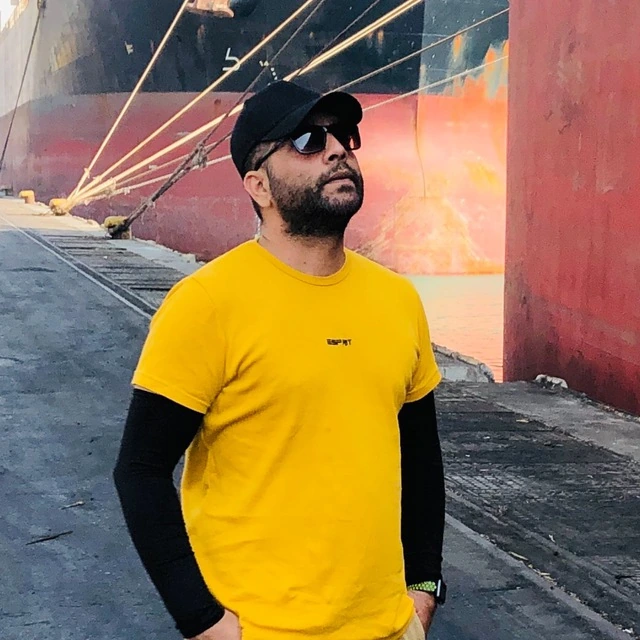
My name is Hamed Khodabakhshi. For many years, my professional life has been devoted to international commerce, particularly the trade of road construction machinery. This experience taught me how goods move across borders, how trust is built between businesses from different cultures, and how professional documentation, negotiation, logistics, and long-term relationships shape successful international trade.
Yet behind this modern commercial path stood another history, older, quieter, and deeply personal.
For generations, my ancestors were Persian carpet weavers.
Their world was not defined by industrial machinery or international contracts. It was shaped by looms, natural fibers, carefully prepared colors, and the patient rhythm of knots tied by hand. Through their work, they did more than produce carpets. They preserved artistic knowledge, regional identity, family memory, and a part of Iranian civilization.
Persian Royal Rug represents the meeting point of these two worlds.
A Heritage Woven Across Generations
In traditional Persian families, craftsmanship was rarely learned from books.
It was observed.
It was practiced.
And it was passed from one generation to the next.
The knowledge of weaving existed in the movement of the hands, the recognition of quality fibers, the understanding of color, and the patience required to complete an artwork that might take months or years.
My ancestors belonged to this tradition.
For them, carpet weaving was not merely an occupation. It was a cultural responsibility and a way of life. Every carpet reflected the character of its maker and the artistic identity of the region in which it was created.
Although my own professional path initially led me toward international trade, the heritage of Persian weaving remained part of my identity.
Over time, I began to understand that inheritance is not limited to objects passed down through a family. Sometimes, the most important inheritance is a responsibility waiting to be continued.
Lessons from International Trade
Trading road construction machinery may appear entirely different from presenting Persian carpets to international collectors. In practice, however, both fields depend on many of the same principles.
Trust must be earned.
Technical information must be accurate.
Commitments must be respected.
Documentation must be complete.
And every product must reach its destination professionally and securely.
Years of working in international commerce allowed me to understand the expectations of global clients. International buyers do not evaluate only the product itself. They also evaluate the professionalism of the company, the transparency of communication, the quality of the documentation, and the reliability of the entire purchasing experience.
This understanding became central to the vision of Persian Royal Rug.
The beauty of a Persian carpet must be matched by the quality of its international presentation.
A Decision Beyond Business
The creation of Persian Royal Rug was not simply a decision to enter a new market.
It was a decision to reconnect with my family's artistic heritage and give it a contemporary international direction.
I realized that Persian carpets should not be presented abroad merely as luxury furnishings. They must be introduced as cultural works carrying the history, imagination, and artistic intelligence of Iran.
Each authentic carpet represents far more than its materials.
It contains the knowledge of the designer.
The patience of the weaver.
The expertise of the dyer.
The identity of its region.
And the memory of generations who protected this art before us.
My role is not to replace the master weaver or reinterpret their craftsmanship. My responsibility is to build a bridge between their art and the international audience that deserves to experience it.
Bringing Iranian Art into Homes Around the World
Iranian civilization has given the world extraordinary achievements in poetry, architecture, philosophy, miniature painting, calligraphy, and decorative art.
The Persian carpet brings many of these traditions together on a single woven surface.
Its geometry reflects architecture.
Its flowers recall Persian gardens.
Its colors preserve ancient knowledge of nature.
Its pictorial scenes carry literature, history, and mythology.
To introduce a Persian carpet into an international home is therefore to introduce more than an object of beauty. It is to bring a fragment of Iranian civilization into a new cultural environment.
This is the purpose at the heart of Persian Royal Rug.
The goal is not simply to export carpets. It is to present Iranian art with the dignity, accuracy, and professionalism it deserves.
Tradition Supported by Modern Standards
Heritage alone cannot guarantee success in today's international market.
A traditional artwork must be supported by modern systems of authentication, documentation, communication, packaging, insurance, and logistics.
Persian Royal Rug was founded to unite these standards with genuine Iranian craftsmanship.
Every carpet should be presented with clear information about its origin, dimensions, materials, weaving technique, artistic character, and physical condition.
Every international client should receive transparent guidance before making a decision.
Every shipment should be managed with the care appropriate for a collectible work of art.
The purpose of professionalism is not to commercialize tradition. It is to protect it.
When a carpet is properly documented and respectfully presented, its story can continue long after it leaves the loom.
The Weaver and the Collector
A meaningful connection exists between the person who creates a Persian carpet and the person who eventually preserves it.
The weaver gives years of skill, concentration, and patience to the work.
The collector gives it a new home and accepts responsibility for its future.
Persian Royal Rug stands between these two individuals.
Our role is to ensure that the value created in an Iranian workshop is understood by the international collector. This requires more than sales. It requires education, cultural interpretation, honest communication, and respect for both sides of the relationship.
A collector should know not only what they are acquiring, but also why the piece matters.
Returning with a New Responsibility
Returning to a family heritage does not mean repeating the past.
It means understanding what the past has entrusted to us and finding a meaningful way to carry it forward.
My ancestors preserved the art of Persian carpet weaving through their hands. My path has given me experience in international trade and cross-border commerce.
Persian Royal Rug is my attempt to connect these two legacies.
It is a return to the family tradition, but with a new responsibility: to introduce the finest expressions of Persian weaving to collectors, designers, galleries, and homes around the world.
This journey is deeply personal, yet its purpose extends beyond one family.
It is about preserving the dignity of Iranian craftsmanship.
It is about supporting the visibility of Persian art.
And it is about ensuring that authentic cultural heritage continues to find its rightful place in the modern world.
A Heritage with a Future
Persian Royal Rug looks toward the future without separating itself from the past.
Its foundation rests upon generations of craftsmanship, while its direction is shaped by modern international experience.
The loom and the global marketplace may appear to belong to different eras, but they can serve the same purpose when brought together with integrity.
One creates the artwork.
The other carries its story across borders.
Persian Royal Rug was created to bring these worlds together, to ensure that the artistry inherited from previous generations is not only remembered, but also seen, understood, and treasured internationally.
For me, this is more than trade.
It is a return.
It is a responsibility.
And it is my contribution to bringing the art of Iran and the depth of Iranian civilization into homes around the world.
What Family Heritage Means in a Professional Rug Business
Family heritage is meaningful only when it creates responsibility. In the Persian rug trade, inherited familiarity with weaving can help a buyer recognize materials, structure, finishing, and regional character, but professional work also requires verification. Memory and experience should guide examination, not replace evidence.
For Persian Royal Rug, this means presenting carpets with measurable information: exact dimensions, pile and foundation materials, knot count or Raj where relevant, condition, origin, availability, and known workshop or weaver attribution. When a signature is woven into a rug, it should be photographed and recorded. When a certificate is available, it should accompany the object rather than being treated as promotional decoration.
This documentation protects both sides of the transaction. The collector understands what is being acquired, and the maker's work is less likely to be reduced to a generic category such as “oriental rug.” A specific carpet deserves a specific identity.
From International Trade to Collector-Level Documentation
International trade taught me that trust is built through systems. A beautiful object still needs accurate invoices, secure packing, clear terms, insurance, customs documentation, reliable communication, and a traceable chain from origin to delivery. Luxury without operational discipline is fragile.
Persian rugs create additional responsibilities because each piece is unique. A replacement cannot simply be taken from a warehouse if a one-of-a-kind carpet is damaged. Photography before shipment, protective rolling, breathable wrapping, moisture control, robust outer packaging, and appropriate cargo insurance are therefore part of the product's professional presentation.
For international buyers, transparent commercial language also matters. FOB, CIF, shipping insurance, delivery responsibility, taxes, import requirements, and return conditions should be explained without ambiguity. These details may sound separate from art, but they determine whether art can move safely across borders.
Authenticity Is More Than a Certificate
A certificate can support a rug's identity, but authenticity begins with the carpet itself. The reverse reveals knot structure and foundation; the pile reveals fibre quality and clipping; the sides and ends show how the object was finished. Design, palette, materials, and construction should be consistent with the claimed weaving tradition.
For this reason, our approach to an authentic Persian rug combines documentation with physical evidence. A certificate from a recognized association is useful. A woven name can be useful. Provenance can be useful. None should be read in isolation. Strong identification is cumulative and should remain understandable to a future owner, appraiser, insurer, or conservator.
This principle is especially important in international e-commerce, where buyers may not inspect the carpet in person before purchase. High-resolution front and reverse images, close views of knots and borders, accurate colour photography, and clear condition descriptions are essential parts of trust.
Presenting Iran's Regional Weaving Traditions with Accuracy
Persian carpet culture is not one visual style. Tabriz, Kashan, Kerman, Qom, Isfahan, Nain, Bijar, Heriz, village weaving districts, and tribal traditions developed distinct structures and design languages. A serious international platform should preserve those distinctions rather than flattening them into a single luxury category.
A Tabriz floral carpet may be evaluated through precision of drawing, workshop structure, materials, and knotting. A Kerman carpet may be recognized through its palette, floral composition, pictorial tradition, or particular period characteristics. A Qom silk rug may depend on extremely fine knotting and luminous material. A tribal piece may derive importance from spontaneous geometry, wool quality, natural colour, and cultural continuity.
Accurate naming is a form of respect. It helps collectors learn, helps search engines understand the subject matter, and helps regional traditions remain visible in the global market.
Translating a Physical Craft into a Digital Experience
A website can never reproduce the full experience of touching a hand-knotted rug, changing viewing angle, or examining the reverse under natural light. The digital task is therefore not to imitate the physical experience but to reduce uncertainty before the object is seen in person.
Professional product pages should provide dimensions, close-up photography, fibre information, knot density where known, design description, condition, provenance, certification, shipping status, and a clear price structure. Multilingual presentation is also important because Persian rugs are collected across Europe, East Asia, the Gulf region, North America, and beyond.
Search engine optimization should support this educational role. Terms such as authentic Persian rug, hand-knotted Persian carpet, pure silk Persian rug, and regional names should appear because they accurately describe the objects, not because they are being repeated mechanically. Useful SEO begins with precise information.
The Relationship with Collectors Does Not End at Delivery
A collectible carpet may remain with one family for decades. Professional responsibility therefore continues after the sale through care guidance, documentation, and access to specialist advice. Owners should know how to rotate a rug, protect it from prolonged sunlight and damp, respond to spills, select appropriate cleaning, and identify when restoration requires a specialist.
For high-value pieces, maintaining a digital and physical file is useful. This can include invoices, certificates, high-resolution photographs, condition notes, shipping records, restoration history, and correspondence about attribution. Such records strengthen provenance for future insurance, inheritance, appraisal, or resale.
Long-term relationships also improve the market. When collectors understand why one rug differs from another, purchasing becomes less dependent on exaggerated labels and more dependent on craftsmanship, authenticity, and informed preference.
A Commercial Platform with a Cultural Responsibility
Persian carpets exist in a global market, but they are also part of Iran's cultural record. Their motifs preserve garden imagery, architecture, poetry, geometry, calligraphy, local colour traditions, and workshop knowledge. Commercial success should not require removing that context.
My objective is to connect the work of Iranian weavers with international buyers while keeping the maker, region, technique, and history visible. That is why the written catalogue matters as much as photography. A carpet described only by size and price loses part of its identity.
The future of Persian weaving depends on more than nostalgia. It requires skilled younger weavers, access to quality wool and silk, responsible dyeing, fair commercial relationships, modern documentation, and international demand that recognizes genuine handwork. A professional platform can contribute by making that value legible.
Persian Royal Rug: Heritage with a Measurable Future
The strongest way to honour tradition is to make it sustainable. For Persian Royal Rug, that means combining family knowledge with repeatable professional standards: product identification, multilingual cataloguing, technical SEO, structured data, clear commercial terms, secure logistics, and consistent after-sale documentation.
I, Hamed Khodabakhshi, see this work as a bridge between the loom and the international collector. The bridge must be strong enough to carry both the economic value of the rug and the cultural meaning behind it. That is the standard by which the project should grow.
Our Quality Philosophy: Evidence Before Adjectives
Luxury markets often rely on adjectives, but Persian rugs deserve measurable descriptions. Instead of asking buyers to accept words such as “fine,” “rare,” or “museum quality” without explanation, the catalogue should show the evidence: fibre, foundation, Raj or knot density, dimensions, design structure, signature, certification, condition, and close photographs.
This principle is especially important when presenting high-value Tabriz, Kerman, Kashan, or Qom carpets. Fine materials and dense knotting can be stated precisely. If silk is used only in floral details, the description should say so. If warp and weft are silk, that should be distinguished from a cotton foundation. Precision builds stronger trust than exaggerated language.
Evidence also protects the reputation of Iranian craftsmanship. When the international buyer can verify what makes a carpet exceptional, the value is attached to real work rather than marketing.
Why Multilingual Presentation Matters
Persian carpets belong to an international collecting culture. A buyer in Germany may search for technical construction, a French collector may focus on provenance and design history, a Gulf client may prioritize size and shipping, and an East Asian collector may examine silk quality and workshop attribution. The object is the same, but the information must remain accurate across languages.
Multilingual cataloguing is therefore not a matter of translating promotional phrases. Technical terms, dimensions, materials, knot measurements, price conditions, and authenticity statements need consistent meaning. Canonical URLs, hreflang, structured data, and localized metadata help search engines direct each reader to the correct version.
For Persian Royal Rug, this digital infrastructure is part of the export mission. It allows a carpet woven in Iran to be understood before it crosses a border.
A Personal Commitment to the Name Behind the Project
My name appears on these articles because I believe authorship should carry accountability. I do not want Persian Royal Rug to be an anonymous catalogue that repeats generic descriptions. The information should reflect real study of Iranian handwoven carpets, real trade experience, and a willingness to correct and improve technical details when necessary.
That commitment includes preserving sources, distinguishing fact from attribution, and avoiding claims that cannot be supported. It also means recognizing the people whose work makes the project possible: weavers, designers, dyers, finishers, restorers, photographers, logistics specialists, and the families that have kept weaving knowledge alive.
The project carries a commercial purpose, but its credibility depends on something larger: presenting Persian carpet culture in a form that international buyers can trust and future collectors can use.
Continuity Through Accuracy
For me, continuity means more than keeping a family story alive. It means improving the accuracy with which Persian rugs are documented and presented. Every correct material description, clear photograph, preserved source, and honest attribution strengthens the connection between the original maker and the future collector.