For centuries, investors have searched for assets that can preserve wealth through economic cycles. Gold, fine art, vintage watches, rare wines, and classic automobiles have all earned a place in long-term investment portfolios. Yet one category is often overlooked despite its remarkable history of appreciation: authentic Persian handwoven rugs.
Unlike mass-produced consumer goods that lose value after purchase, a high-quality Persian rug has the potential to become more desirable over time. While not every rug will appreciate in value, exceptional examples that combine craftsmanship, rarity, excellent condition, documented origin, and age have historically attracted collectors and serious buyers across the world.
Today, many collectors no longer view fine Persian rugs simply as decorative objects. Instead, they see them as tangible assets capable of preserving both beauty and financial value across generations.
More Than Decoration
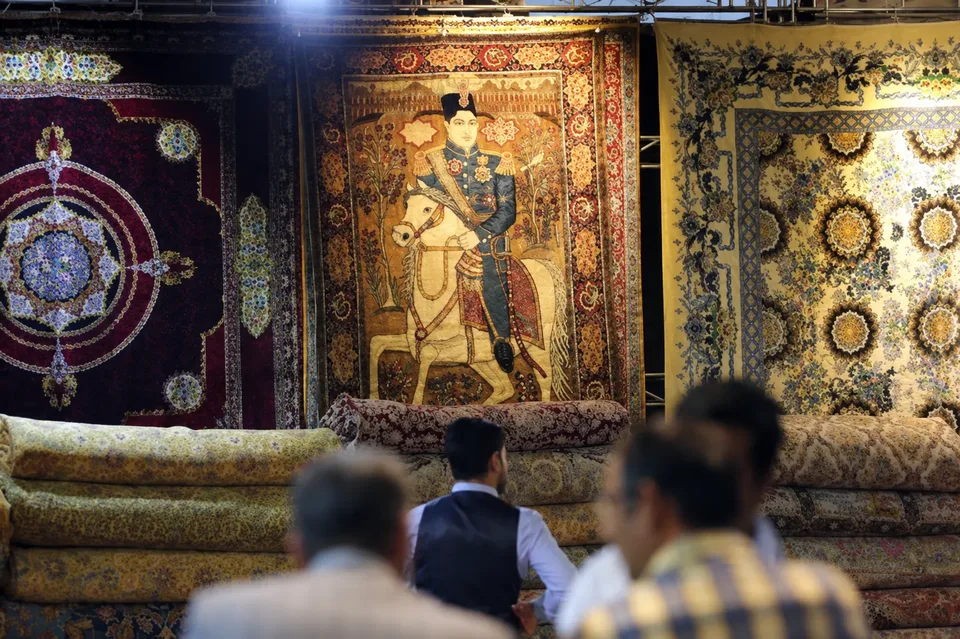
Most home furnishings begin to depreciate the moment they are installed. Authentic Persian rugs are different. A carefully selected handmade rug is designed to last for decades. With proper care, it can remain part of a family collection while continuing to serve both a practical and artistic purpose.
Why Age Matters
Age is one of the most influential factors in the value of an authentic Persian rug. As the years pass, well-preserved handmade rugs become increasingly difficult to find. Scarcity naturally increases collector interest, especially when quality, authenticity, and condition remain exceptional.
Age alone does not create value. However, when age is combined with outstanding craftsmanship, rarity, proper preservation, and documented provenance, it often increases long-term desirability. This is especially true for fine silk rugs and museum-quality examples.
Time Creates Scarcity
Unlike factory-made products, every handmade Persian rug exists in limited supply. Historic workshops disappear, master weavers retire, and traditional techniques become rarer. As supply becomes more limited, outstanding rugs often become more attractive to collectors.
The Role of Proper Use
Many owners believe a valuable rug should never be used. In reality, a handmade Persian rug was created to be lived with. Responsible use combined with professional care does not necessarily reduce value. Proper cleaning, protection from excessive sunlight, balanced humidity, and timely restoration help preserve both beauty and long-term market appeal.
Silk Rugs and Investment Potential
Fine Persian silk rugs often receive special attention from collectors because of their exceptional knot density, artistic detail, and naturally limited production. While future prices can never be guaranteed, premium silk rugs have historically attracted strong collector demand.
Documentation Matters
Certificates of authenticity, expert evaluations, purchase records, and ownership history strengthen confidence in any investment. Well-documented rugs are generally easier to evaluate and more attractive to serious buyers.
A Tangible Asset
Financial markets fluctuate, but tangible assets continue to attract long-term investors. A fine Persian rug combines daily enjoyment with the possibility of preserving value across generations. It is both an object of beauty and a physical asset.
Final Thoughts
An authentic Persian rug should not be viewed simply as a floor covering. For many collectors it represents a long-term investment in craftsmanship, culture, and history. Although no investment is guaranteed to appreciate, exceptional Persian rugs have demonstrated an enduring ability to attract collectors over time.
How Collectors Evaluate Investment-Grade Persian Rugs
The phrase investment-grade Persian rug should be used carefully. There is no universal exchange, grading board, or guaranteed appreciation schedule comparable to a regulated financial instrument. In the rug market, investment quality is a conclusion reached from several interacting factors: authenticity, weaving origin, age, materials, condition, artistic distinction, rarity, provenance, market liquidity, and the credibility of the seller or specialist who documents the piece. A rug may be beautiful without being rare, old without being important, or finely knotted without having strong secondary-market demand.
Experienced buyers therefore begin with identification rather than price. They ask whether the rug is genuinely hand-knotted, whether the structure and materials are consistent with the claimed region, whether the design belongs to a recognized workshop or weaving tradition, and whether restoration has altered original material. These questions matter because the market tends to reward coherent, well-documented objects. A rug whose structure, palette, age, and attribution support one another is easier to appraise than a rug carrying an ambitious label that cannot be verified.
For collectors comparing pieces, a useful hierarchy is to separate technical quality from market significance. Technical quality includes knot regularity, warp and weft stability, pile quality, drawing, colour control, finishing, and dimensional balance. Market significance includes rarity, workshop reputation, historical period, provenance, publication history, exhibition history, and sustained collector interest. The strongest carpets combine both.
Knot Density, Materials and Why Numbers Need Context
Knot density is frequently used in sales descriptions because it is easy to convert into a number, but a high number is not automatically a sign of high investment value. Persian weaving traditions use different knot structures, pile heights, foundation systems, and design languages. A tribal or village rug can be culturally important with a relatively coarse structure, while a fine Qom or Isfahan carpet may depend on very dense knotting to render miniature floral or pictorial detail.
Measurements such as Raj, knots per square inch, or knots per square metre should therefore be read as structural information, not as a universal ranking. Raj, traditionally used in parts of Iran, describes knot rows within a regional measuring convention and should not be converted casually into KPSI without counting both horizontal and vertical knot frequency. Serious appraisal also examines whether the knots are symmetrical or asymmetrical, whether the foundation is cotton, wool, or silk, how tightly the wefts are packed, and whether the pile has been clipped evenly.
Materials influence both visual character and long-term preservation. Fine kork wool can produce a soft, resilient pile with excellent colour depth. Silk can support extremely precise drawing and luminous tonal shifts, but it also demands careful handling and protection from abrasion. A silk foundation can indicate a technically ambitious carpet, yet material alone does not create rarity. Collectors pay for the quality of execution, the integrity of the object, and the significance of the weaving, not merely for the cost of fibre.
Provenance, Condition and Restoration History
In the secondary market, provenance can materially affect confidence. A clear chain of ownership, an old invoice, an auction record, a workshop certificate, an inheritance document, or a specialist appraisal can help establish when and where a rug entered the market. Provenance is especially important for antique Persian carpets, signed workshop pieces, pictorial rugs, and carpets attributed to recognized master weavers.
Condition must be evaluated just as rigorously. Original pile, intact side cords, stable end finishes, healthy foundation threads, and even colour are positive signs. Wear is not automatically disqualifying in an old carpet, but the nature and location of wear matter. Low pile across an open field is different from foundation breakage, moth damage, brittle silk, chemically weakened wool, or extensive reweaving. A competent condition report should distinguish conservation from reconstruction.
Restoration can preserve an important textile, but buyers should know what has been done. Re-knotting, reweaving, re-fringing, selvedge reconstruction, patching, re-dyeing, and aggressive chemical washing can affect market perception differently. Invisible restoration is not the same as undisclosed restoration. For valuable rugs, transparency is part of value preservation because a future buyer or appraiser will want to understand the percentage of original material that remains.
Regional Schools and Collector Demand
The term Persian rug covers many distinct weaving cultures. Tabriz, Kashan, Isfahan, Kerman, Qom, Nain, Heriz, Bijar, Sarouk, Hamadan, tribal groups, and village weaving districts developed different structures, colour systems, motifs, and workshop traditions. Collector demand can shift between these categories, and the most desirable example is not always the most famous city name.
Workshop carpets often attract buyers who value precise drafting, formal medallions, inscriptions, signatures, pictorial subjects, silk detail, and documented authorship. Village and tribal rugs can appeal for different reasons: spontaneous drawing, archaic motifs, natural abrash, unusual proportions, or the survival of a local design language. In both cases, rarity is specific. A common design in excellent condition may be less scarce than an unusual weaving with a smaller market but stronger scholarly interest.
When evaluating a carpet for long-term collecting, it is useful to compare like with like. A 19th-century Heriz should not be judged by the knot density expected of a modern pure-silk Qom carpet. A Kerman pictorial rug should be assessed for drawing, colour, condition, and artistic execution within its own tradition. Context protects buyers from simplistic rankings and helps explain why certain carpets achieve stronger results in specialist sales.
Market Liquidity, Valuation and Exit Strategy
One of the least discussed aspects of rug investment is liquidity. Persian rugs are physical assets, and selling them can take time. A dealer, auction house, private collector, interior-design client, museum-oriented buyer, and online marketplace may all assign different values to the same object. The difference between retail replacement value, insurance value, auction estimate, trade price, and immediate cash offer can be substantial.
For this reason, buyers should not treat a retail asking price as proof of investment performance. A more disciplined approach is to record the purchase price, comparable sales where available, shipping and insurance costs, restoration expenses, and any appraisal fees. Over time, this creates a realistic cost basis. If a future sale becomes necessary, the owner can choose a channel appropriate to the rug's quality and target audience rather than accepting the first generalized valuation.
Rare carpets with strong documentation may benefit from specialist auction exposure, while high-quality contemporary rugs may be more liquid through established dealers or private networks. Very large formats, highly personal colour palettes, or unusual subjects can take longer to sell even when technically excellent. Investment potential is therefore partly a question of matching the object to the right future market.
Preservation, Storage and Insurance as Part of the Investment
A rug cannot preserve value if it is physically neglected. Routine care is not cosmetic; it is preventive conservation. Vacuuming should be gentle and appropriate to pile condition, rotating the rug can distribute light and traffic exposure, and a suitable underlay can reduce movement and mechanical stress. Persistent moisture, direct intense sunlight, insect activity, unsuitable detergents, and poorly executed cleaning can cause damage that is expensive or impossible to reverse.
Long-term storage requires even more care. Valuable carpets should be clean and dry before storage, rolled rather than sharply folded where practical, protected with breathable materials, and checked periodically for insects and humidity. Plastic wrapping can be problematic in conditions where condensation is possible. Silk carpets and fragile antique pieces may require specialist advice.
Insurance documentation should include clear photographs of the front and back, measurements, materials, known origin, identifying marks, signatures, certificates, invoices, and an independent valuation when appropriate. This record does more than support an insurance claim; it creates a durable identity file for the object and strengthens future provenance.
A Practical Buyer Checklist Before Acquiring a Collectible Persian Rug
Before purchase, examine the rug in natural and artificial light. Look at the reverse to understand knot structure and repairs. Compare colour on the front and back, inspect side cords and end finishes, and ask whether the pile is wool, kork, silk, or a combination. Confirm exact dimensions rather than relying on nominal size. For fine carpets, request knot-density information with the measurement method stated clearly.
Ask for the origin and attribution in writing. If a workshop, master weaver, period, or city is claimed, ask what evidence supports that claim. Request a condition report for older pieces and disclose any restoration already known. For expensive purchases, independent examination can be more valuable than a promotional certificate issued only by the seller.
Finally, buy a rug that succeeds as an artwork even if the market does not move as expected. The strongest collecting decisions unite connoisseurship with financial discipline. A carpet that is authentic, technically sound, visually compelling, well documented, and suitable for long-term care gives its owner both cultural enjoyment and a more defensible basis for future value.
Investment Perspective: Preservation Before Speculation
The most credible case for Persian rugs as collectible assets is not based on promises of rapid appreciation. It is based on scarcity created by time, the difficulty of reproducing master-level handwork, the cultural importance of regional weaving traditions, and the survival of exceptional examples in good condition. These factors can support long-term demand, particularly for carpets that can be identified and documented with confidence.
For international buyers searching for an authentic Persian rug investment, the practical priority should be preservation before speculation. Study the weaving tradition, verify the materials, understand condition, document provenance, and choose quality that remains convincing under close examination. A Persian carpet becomes a serious collectible when its beauty is supported by evidence.
Antique, Vintage and Contemporary: Different Collecting Strategies
Age categories influence both appraisal and collecting strategy. An antique Persian rug may offer historical rarity, old materials, obsolete workshop methods, and a stronger connection to a particular period. A vintage rug may combine established age with practical usability. A high-quality contemporary rug may offer superior condition, documented authorship, and a clearer production history. None of these categories is automatically the best investment; they simply carry different types of risk and opportunity.
Antique pieces require careful condition analysis because age can create both rarity and vulnerability. Old wool may remain remarkably resilient, while weak foundations, oxidized dyes, missing ends, low pile, or historic repairs may reduce usable life. Contemporary workshop carpets avoid some of these condition problems but depend more heavily on artistic distinction, maker reputation, and future collector demand.
Collectors should also avoid assuming that “old” means antique or that an aged appearance proves period. Chemical washing, artificial distressing, altered fringe, and deliberate fading can create misleading signals. Attribution should be based on structure, materials, design, colour, and provenance together.
Using Comparable Sales Without Oversimplifying the Market
Comparable sales are useful when they truly are comparable. Size, age, region, workshop, material, condition, design, provenance, and sale venue all influence price. An auction result for a signed silk Qom carpet cannot be used directly to value an unsigned wool rug of similar dimensions. Even within one weaving centre, differences in period and workshop quality can be substantial.
When reviewing auction archives or dealer records, note whether the price is hammer price, premium-inclusive result, retail asking price, or final private-sale price. These are different numbers. Currency changes, shipping, taxes, restoration, and local demand can also affect comparisons across countries and years.
The most reliable approach is to build a range rather than a single predicted price. A range acknowledges uncertainty and helps the collector decide whether the purchase price is reasonable relative to available evidence.
Red Flags in Investment-Focused Rug Marketing
Collectors should be cautious when a seller guarantees appreciation, uses an unsupported master-weaver name, presents knot count as the only proof of quality, or refuses to show the reverse of the rug. Similar caution is justified when age is stated with unrealistic precision but no provenance, when restoration is described vaguely, or when a certificate repeats the seller's claims without independent evidence.
Another warning sign is the indiscriminate use of terms such as “museum quality,” “royal,” “rare,” or “investment piece.” These phrases can be useful catalogue descriptors only when the underlying carpet supports them. Serious buyers should ask what specific technical, historical, or market evidence justifies the label.
Investment language should increase scrutiny, not reduce it. The more significant the financial claim, the stronger the documentation should be.
Where a Persian Rug Fits in a Collecting Portfolio
A collectible rug is best understood as a long-duration, low-liquidity tangible asset rather than a substitute for cash or diversified financial investments. Its strongest role is often within a broader collection of art, design, antiques, or culturally significant objects where the owner already values preservation, provenance, and specialist knowledge.
Because transaction costs can be high and resale can take time, buyers should avoid using short-term funds for major rug purchases. The financial case is strongest when the owner can hold the piece patiently, maintain it correctly, and choose the right future sale channel. This time horizon also allows cultural enjoyment to remain part of the return.
For serious collectors, discipline is simple: acquire fewer pieces of higher quality, keep documentation together, photograph condition periodically, and review insurance values when the market or replacement cost changes materially.
Final Collector Note
Before treating any Persian rug as an investment, confirm that you would still want to own it if prices remained unchanged for many years. This simple test separates collecting from speculation. The rug should justify its place through craftsmanship, authenticity, artistic quality, and cultural interest first. Financial potential is strongest when those qualities are already present.
Keep the invoice, certificate, condition report, restoration history, photographs, and shipping documents together. Future value is easier to defend when the object has a continuous record. For important pieces, periodic specialist appraisal can update insurance values and identify conservation needs before damage becomes serious.