Introduction: A Work of Art That Travels Without a Passport
A Persian rug is never merely a furnishing. It is a portable architecture of colour, memory and disciplined human labour: a field in which gardens, hunting scenes, medallions, calligraphy, geometry and imagined paradises are translated into thousands—or sometimes millions—of individually tied knots. Long before the modern language of cultural diplomacy existed, Iranian carpets were already crossing borders as courtly gifts, commercial treasures and symbols of cultivated taste.
Their journey from workshops in Tabriz, Kashan, Isfahan, Kerman, Heriz, Bijar, Qom and tribal weaving regions to European collections is therefore more than a history of trade. It is a history of how power chose to present itself. In royal residences, diplomatic interiors and aristocratic collections, the Persian carpet offered something European decorative arts repeatedly admired: an entire world contained within a textile surface. Its scale could command a room; its detail rewarded intimate examination; and its materials carried the prestige of silk, fine wool, natural dyes and patient craftsmanship.
This article follows that wider cultural journey—from the royal imagination associated with Britain and France to the museums and dynastic collections of Vienna, Madrid, Saint Petersburg and beyond. It does not claim that every palace story repeated in the carpet trade can be verified. Instead, it distinguishes documented history from romantic tradition and asks a more valuable question for today’s international buyer: why have authentic Persian rugs remained persuasive objects of prestige across radically different eras, interiors and political systems?
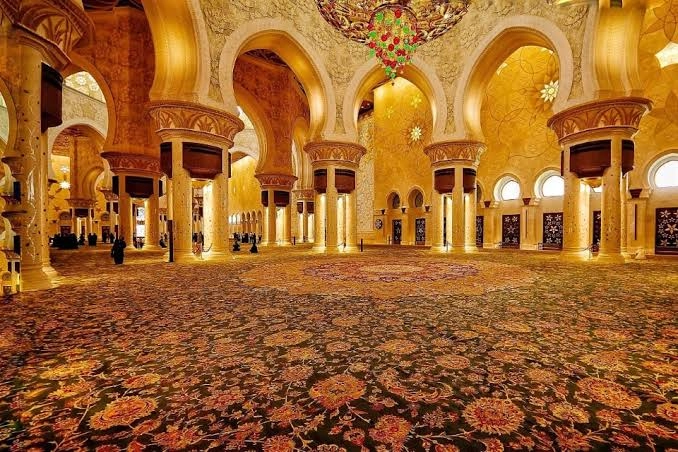
1. The Origins of Carpet Diplomacy
The great expansion of Persian carpet prestige is closely connected with the Safavid period, particularly the sixteenth and seventeenth centuries. Under Safavid patronage, carpet design achieved an extraordinary synthesis of workshop organisation, manuscript aesthetics, architectural planning and technical invention. Central medallions, scrolling vines, palmettes, cloud bands, animals and garden plans were developed with a level of visual coherence that allowed a carpet to function like a painted or illuminated surface—yet one made through structure rather than applied pigment.
Court workshops and major urban centres produced pieces for royal use, religious foundations, elite patrons and export. Some of the finest carpets may also have served as diplomatic gifts. Museum scholarship notes that certain Safavid carpets reveal designs shaped by exchange with Europe, while other luxurious groups, including the so-called Polonaise carpets, were admired in European Baroque settings and were likely produced both for Iranian patrons and for export or presentation abroad.
A carpet’s diplomatic effectiveness was unusually subtle. Gold, silver and jewels announced wealth directly; a great carpet announced wealth through patience, discernment and control. The object could be unfolded ceremonially, displayed beneath a throne, hung on a wall, spread over a table or reserved for a privileged room. It turned hospitality into theatre. The host did not need to explain the labour embodied in the piece: its scale, lustre and density of design made the argument silently.
2. Maritime Trade and the Formation of European Collections
The growth of long-distance maritime commerce created new routes for Iranian textiles. Persian carpets moved through ports in the Persian Gulf and through overland networks linking Iran with the Ottoman world, Russia, India and the Mediterranean. European trading companies, diplomatic missions, merchants and specialist dealers all contributed to the circulation of carpets, although the surviving record is uneven and individual ownership histories are often complex.
In Europe, valuable eastern carpets were not always placed on the floor. Paintings and inventories show that they could be draped over tables, balconies, chests and balustrades, or hung as prestigious textiles. Their use above ground protected them, but it also elevated them visually. The carpet became a sign of global reach: proof that the household could obtain rare goods from distant centres of production.
Over time, royal and aristocratic ownership fed the formation of museum collections. Pieces that had once functioned within ceremonial interiors were reclassified as masterworks of textile art. This change of context—from palace to gallery—helped establish the modern language through which collectors evaluate Persian rugs: provenance, period, weaving centre, structure, materials, condition, rarity, design quality and cultural importance.
3. Britain: Persian Carpets and the Performance of Monarchy
Britain’s relationship with Persian carpets developed through trade, diplomacy, collecting and the nineteenth-century revival of interest in the decorative arts. Royal residences such as Buckingham Palace and Windsor Castle are frequently invoked in the commercial mythology of Persian rugs. Exact claims about particular royal gifts, placements or ceremonial occasions require archival confirmation, but the broader association is credible and historically meaningful: Persian carpets became part of the visual vocabulary through which British elite interiors expressed international sophistication.
Large reception rooms demanded objects capable of holding their own against gilded ceilings, carved furniture, paintings and chandeliers. A monumental Kerman, Tabriz or Heriz carpet could organise such a room from below. Its border established a visual boundary; its central field stabilised furniture arrangements; and its colour linked architectural surfaces that might otherwise feel disconnected. In this role, the rug was both functional and compositional.
The influence also moved beyond collecting. British designers associated with the Arts and Crafts movement studied historic textiles and ornament from many cultures, including Persia. William Morris’s work should not be reduced to direct copying of Persian rugs, yet his dense botanical rhythms, repeated arabesques and belief in the unity of art and craft resonated with principles visible in Iranian design traditions. Persian carpets thus participated in a larger nineteenth-century debate about industrial production, craftsmanship and the moral value of handmade objects.
For contemporary buyers, the British chapter offers a useful lesson. A Persian rug succeeds in a grand interior not because it imitates the room, but because it introduces an independent order. It can soften formal architecture without weakening it, add colour without depending on fashion and create a sense of inheritance even within a recently designed space.
4. France: Versailles, the Savonnerie and the Prestige of the Persian Model
France presents a particularly revealing case because admiration for eastern carpets existed alongside an ambitious programme to create a distinctly French luxury industry. The Savonnerie manufactory became famous for knotted-pile carpets designed for royal interiors. Its products were French in iconography and institutional identity, yet they emerged in a European culture already fascinated by prestigious carpets from the Islamic world.
At Versailles, the scale of architecture transformed floor coverings into instruments of state display. Carpets had to converse with marble, gilded boiserie, painted ceilings and carefully staged ceremonial movement. Persian examples and Persian-inspired ideas contributed to the broader European understanding that a carpet could be monumental, symbolically charged and architecturally decisive.
It would be inaccurate to present Versailles simply as a repository of Iranian carpets or to treat French production as a copy of Persian weaving. The more interesting history is one of competition and translation. European courts recognised the authority of the eastern knotted carpet and sought to adapt that authority to their own dynastic imagery. The result was not the disappearance of Persian prestige, but its confirmation: the desire to build rival manufactories demonstrated how influential the model had become.
This dialogue remains relevant to luxury interiors today. A Persian rug does not require a historically Persian room. It can enter a French classical setting, an Art Deco apartment or a minimalist contemporary residence because its design is internally complete. The rug brings its own architecture; the surrounding interior decides whether to echo, frame or deliberately contrast with it.
5. The Ardabil Carpet: Monument, Inscription and Global Afterlife
No discussion of Persian carpets in Western collections can avoid the Ardabil Carpet, now preserved at the Victoria and Albert Museum in London. Measuring approximately 10.5 by 5.3 metres, it is among the most celebrated surviving carpets of Safavid Iran. Its vast medallion, lamps, layered ornament and famous dated inscription have made it both a scholarly landmark and a public symbol of Persian artistic achievement.
The history of the Ardabil pair is often simplified into a dramatic story of one carpet being sacrificed to repair another. The documented history is more nuanced, and scholars continue to examine the relationship between the surviving carpets and their restoration. What is certain is that the London carpet reached the British art market in the late nineteenth century and entered the V&A in 1893. A related carpet, now in the Los Angeles County Museum of Art, preserves a similar composition in a different condition and scale.
The Ardabil Carpet teaches collectors several lessons. First, scale alone does not create monumentality; proportion does. Second, technical precision becomes emotionally powerful when it serves a coherent visual idea. Third, provenance and conservation become part of an antique carpet’s identity. A great historic rug is not frozen at the moment of weaving: it accumulates ownership, movement, repair, interpretation and public meaning.
For the international market, the Ardabil Carpet also explains why the term ‘Persian rug’ carries cultural weight beyond a geographic label. It evokes a tradition capable of producing works that museums treat not as decorative accessories but as major achievements of world art.
6. Vienna and the Habsburg World: Carpets for Emperors
The Habsburg courts collected luxury objects from across Europe, the Ottoman world and Iran. The Metropolitan Museum of Art’s celebrated Emperor’s Carpet is a powerful example of this history. Produced in Safavid Iran, it later adorned a Habsburg imperial residence. Its field of floral scrolls, palmettes, cloud bands and animals demonstrates how Persian court weaving could combine abundance with disciplined hierarchy.
In Central European interiors, such carpets offered more than warmth. They created a visual relationship between imperial ambition and global collecting. A ruler surrounded by objects from distant cultures appeared connected to a world larger than the borders of a single realm. The Persian carpet—difficult to make, costly to transport and immediately recognisable as a luxury object—was ideally suited to this performance.
Vienna, Munich and Prague later became important centres for museums, dealers and collectors interested in Islamic and oriental carpets. Scholarship developed alongside collecting, leading to increasingly precise classifications of weave, design, regional origin and historical period. The language used by today’s serious carpet market owes much to this transformation of private admiration into institutional study.
7. Russia and the Northern Routes of Persian Weaving
Iran’s northern trade routes connected weaving centres with the Caucasus, the Russian Empire and wider Eurasian markets. Carpets travelled not only as palace gifts but through merchant networks, border cities and regional exchange. Tabriz, with its commercial importance and design sophistication, played a particularly influential role in later export history.
Russian imperial and aristocratic interiors valued carpets for both ceremonial and practical reasons. In colder climates, textiles changed the acoustic and physical atmosphere of large rooms while also communicating status. Persian carpets could be encountered alongside Caucasian, Anatolian and Central Asian weavings, creating collections in which connoisseurship depended on recognising structural and stylistic differences.
The northern story is therefore not a simple tale of Persian objects entering passive foreign spaces. It is a history of connected visual cultures. Motifs, materials, dealer terminology and consumer preferences moved in several directions. Yet Persian weaving retained a distinct authority because of the depth of its urban workshop traditions and the extraordinary regional diversity of its village and tribal production.
8. Madrid, Lisbon and the Iberian Taste for Eastern Luxury
The Iberian Peninsula possessed its own long history of exchange with the Islamic world, making eastern textiles legible within a particularly rich decorative context. Royal palaces and aristocratic houses in Spain and Portugal combined European furniture, religious art, ceramics, metalwork and imported textiles in interiors shaped by maritime empire.
Specific commercial claims about the exact number or identity of Persian rugs in individual palaces should be checked against current collection catalogues. The larger historical pattern, however, is clear: Persian carpets belonged to the category of internationally admired luxury textiles collected across European courts. Their strong colour, durable structure and capacity to organise large spaces made them suitable for ceremonial residences as well as private salons.
For a modern buyer in Madrid, Lisbon, Marbella or the Algarve, the practical relevance is immediate. Persian rugs can withstand visual competition from stone, patterned tile, carved wood and strong sunlight. A finely chosen rug does not disappear in an architecturally expressive room; it creates a grounded centre from which the other materials can be read.
9. Why Persian Rugs Endured Where Fashions Changed
The survival of Persian carpets in royal, museum and private collections cannot be explained by prestige alone. Their long-term appeal rests on a rare combination of structural integrity, design intelligence, material character and regional variety.
The first advantage is construction. Persian weaving includes both asymmetrical and symmetrical knotting traditions, with wool, cotton or silk used in different combinations for pile, warp and weft. Technical choices vary by region and period, so no single knot should be treated as a universal measure of quality. What matters is the relationship between structure and purpose: a robust Bijar is engineered differently from a refined silk Qom, and each should be judged within its own tradition.
The second advantage is colour. Historically, dyers drew from materials such as madder, indigo, walnut husks and weld, while modern production may include high-quality synthetic dyes as well as natural processes. The collector’s concern should not be ideology but harmony, stability and ageing. Good colour creates depth and movement; poor colour makes even a technically dense rug feel flat.
The third advantage is design range. Persian weaving encompasses courtly medallions, vase compositions, garden plans, hunting scenes, pictorial subjects, repeating florals, angular village geometry and tribal abstraction. This range allows buyers to select a rug that supports architecture rather than merely matching upholstery.
Finally, Persian rugs age visibly but often beautifully. Wool develops surface character, colours soften and slight irregularities reveal the human process. When condition is honestly disclosed and conservation is appropriate, age can deepen rather than diminish aesthetic value.
10. The Persian Rug as an International Luxury Purchase
A buyer acquiring a luxury Persian rug today faces a market very different from the courtly world in which many historic examples circulated. Digital photography, international shipping, online marketplaces and remote consultation have widened access, but they have also made trust more important. A convincing seller must provide information that allows the buyer to understand what is being purchased without relying on vague superlatives.
Each serious listing should identify the likely weaving origin, approximate age or production period, dimensions, materials, knotting tradition where known, condition, restoration, pile character and colour palette. High-resolution images should include the full front, reverse, corners, fringes, edges and close details. For valuable pieces, independent condition reports, provenance documents or expert certificates may be appropriate.
Luxury presentation should never replace evidence. Terms such as ‘museum quality’, ‘investment grade’, ‘royal’ or ‘rare’ must be used with restraint and explanation. A rug may be exceptional because of design, age, colour, scale, material, provenance or condition, but these are different forms of value. International collectors respond best when the seller distinguishes them clearly.
At Persian Royal Rug, the strongest commercial position is not to promise that every carpet belongs in a palace. It is to demonstrate that every selected piece has been examined with the seriousness expected of an object capable of transforming an important interior.
11. Authenticity, Provenance and Responsible Documentation
Authenticity in the Persian rug market is not established by a single label, QR code or certificate. Technology can support documentation, but it cannot replace connoisseurship. A reliable assessment combines physical examination, structural analysis, comparison with known traditions, condition reporting and a transparent account of what is known—and not known—about provenance.
Digital records can nevertheless improve the buyer experience. A product page may preserve measurements, photography, condition notes, ownership history, restoration records and shipment documentation. NFC or QR systems may link a physical object to this record, provided the database is maintained and the claims are verifiable. Blockchain is sometimes proposed for provenance, but its value depends entirely on the quality of the information entered at the beginning.
For antique carpets, responsible language is essential. ‘Circa 1900’ communicates a reasoned range; an exact year should require evidence. ‘Attributed to Kerman’ may be more honest than an absolute origin when structure and design do not permit certainty. Confidence grows when expertise is visible not only in what a seller asserts, but in where the seller sets limits.
12. Conservation: Preserving a Rug for the Next Generation
Royal and museum carpets survive because they are managed as sensitive textile structures. Private owners can follow the same principles at an appropriate scale. The greatest risks include prolonged direct sunlight, unstable humidity, insects, water damage, harsh cleaning, unsuitable adhesives, heavy furniture pressure and repeated wear along the same pathways.
Regular, gentle care is preferable to dramatic intervention. Rugs should be vacuumed carefully according to pile and condition, rotated periodically where use and light are uneven, and inspected for moth activity or edge damage. Spills require prompt professional advice, especially on silk, antique or naturally dyed pieces. Ordinary domestic cleaning methods may permanently alter colour, handle or structure.
Restoration should be documented and proportionate. A skilled conservator may stabilise ends and sides, secure weak areas or reweave losses, but excessive reconstruction can obscure historical evidence. The right goal depends on the object: a floor rug in active use has different needs from a rare collector’s carpet displayed under controlled conditions.
13. Investment Value Without Empty Promises
Persian rugs are often described as investments, but buyers should approach the term carefully. Some exceptional carpets have achieved remarkable auction results, especially when rarity, provenance, condition, scholarship and market timing align. This does not mean that every handmade rug will appreciate, or that past auction records guarantee future performance.
A responsible purchase begins with aesthetic conviction. The rug should have a role in the buyer’s life and interior even if resale is never required. Financial considerations then depend on disciplined selection: quality relative to type, credible attribution, scarcity, condition, documentation and an acquisition price that reflects the current market.
The greatest long-term advantage of a fine Persian rug may be its dual nature. It can be lived with as art, used as architecture and preserved as a transferable object. Unlike many fixed decorative investments, it can move between houses, countries and generations. That mobility is part of the same history that once carried Persian weaving into royal collections.
14. From Palace Floors to Contemporary Architecture
The modern life of the Persian rug is not confined to historic interiors. In contemporary architecture, it can provide the very qualities that glass, concrete and stone often lack: tactile depth, acoustic softness, irregularity and narrative. A restrained room may need only one complex surface, and a Persian carpet can fulfil that role without additional decoration.
Scale is critical. In a large living room, a rug should usually relate to the principal furniture group rather than float as an isolated island. In a dining room, chairs should remain on the rug when pulled back. In a gallery-like space, a smaller rare carpet may be displayed with generous negative space, allowing its border and field to be read as a complete composition.
Colour selection should consider both daylight and artificial light. Deep indigo, madder red, ivory, camel, pistachio, turquoise and aubergine behave differently across climates and materials. Professional photography is useful, but a serious seller should also describe colour variation and provide additional images or video when required.
The best result is not achieved by matching every colour in the room. It comes from establishing a hierarchy. The rug may be the principal work of art, a quiet foundation or a bridge between old and new pieces. Its success depends on intention.
15. The Future: Digital Access, Human Expertise
Virtual viewing tools, high-resolution imagery and augmented reality can help international clients evaluate scale and placement. These technologies are especially useful when a buyer cannot visit a showroom. They can reduce uncertainty, but they should be presented as decision support rather than perfect simulation: screen calibration, lens distortion and ambient light can all affect perception.
Digital collectibles and tokenised ownership have also been discussed in relation to cultural objects. Their relevance to the physical Persian rug market remains limited and should not distract from the fundamentals of ownership: title, condition, provenance, transport, insurance and care. The enduring value resides in the woven object and the knowledge surrounding it.
The future of the market will therefore depend on a productive balance. Digital systems can make information global; human expertise must keep that information accurate. The brands that earn international trust will be those that combine beautiful presentation with verifiable detail, responsive consultation and ethical clarity.
Conclusion: A Bridge That Does Not Wear Away
From Safavid court workshops to European collections, from imperial residences to modern penthouses, Persian rugs have crossed boundaries without surrendering their identity. Their prestige does not come from a single palace anecdote. It comes from centuries of evidence: masterful surviving carpets, museum collections, paintings, trade histories, scholarly study and the continuing vitality of Iranian weaving traditions.
For today’s collector, this history changes the meaning of purchase. An authentic Persian rug is not simply selected to fill a floor area. It enters a lineage of objects valued for their ability to hold architecture, craft, symbolism and human time within one surface.
The most convincing Persian rug is therefore a silent ambassador in the deepest sense. It does not need to imitate the splendour of Buckingham Palace or Versailles. Through material, proportion and design, it carries its own form of sovereignty—one knot at a time.
Frequently Asked Questions
Are handmade Persian rugs a good investment?
Exceptional Persian rugs can retain or increase value when rarity, quality, condition, provenance and market demand align. However, no appreciation is guaranteed. Buy first for artistic and practical value, and seek specialist advice for investment-led acquisitions.
How can I verify the authenticity of an antique Persian rug?
Request detailed front-and-back photography, dimensions, material and structure information, condition and restoration notes, provenance where available, and an expert assessment. A certificate is useful only when its issuer and underlying examination are credible.
Why do prices differ between Kerman, Tabriz, Isfahan, Bijar and Qom rugs?
Price reflects more than origin. Materials, age, design quality, knotting and structure, colour, dimensions, condition, rarity, provenance and current demand all contribute. Each regional tradition should be judged according to its own technical and artistic standards.
Can a traditional Persian rug work in a modern interior?
Yes. Persian rugs are especially effective in minimalist and contemporary spaces because they introduce texture, colour and visual structure. The key is to select the correct scale, palette and level of ornament for the architecture.
How should a Persian rug be cared for in a humid climate?
Maintain stable ventilation, avoid placing the rug directly on a damp surface, use a suitable breathable underlay, rotate it periodically and inspect for mould or insect activity. Valuable or antique rugs should be assessed by a professional textile conservator.
What size rug is suitable for a large living room?
The size should relate to the furniture arrangement, not only the room dimensions. In many living rooms, at least the front legs of the main seating should rest on the rug. For a fully unified arrangement, all principal furniture can sit within the rug’s border.
What information should an international buyer receive before purchase?
A professional listing should include exact dimensions, likely origin, approximate age, materials, condition, restoration, detailed images, price and shipping terms, return policy, and any available provenance or certification.
Collector Consultation
For private sourcing, collection advice, condition enquiries or international delivery assistance, contact Persian Royal Rug. Each serious enquiry should be supported with detailed photography, measurements and transparent object information.
From selection to international delivery
The presence of Persian carpets in royal, diplomatic and historic interiors helps explain the enduring appeal of luxury Persian rugs, antique Persian rugs and collector Persian rugs, but historic prestige does not make every old carpet exceptional. Serious evaluation still depends on material, construction, design, scale, condition, restoration history and provenance. A Tabriz Mahi rug, Kashan medallion rug, Kashan floral rug or Persian Mahi rug should be judged on the individual weaving rather than on a famous room or city name alone. The same principle applies to Qum silk rugs and a Qum silk carpet, where fineness, silk construction and workshop evidence matter more than decorative association. For collectors considering handwoven Persian rugs, the most defensible value comes from connecting cultural context with verifiable technical qualities and the documented history of the actual piece.